THE PLATFORM
What Glaze is — and how it was built
Glaze translates historical oil glazing techniques into a digital environment. The process is structured, repeatable, and measurable — which makes it suitable not only for patient engagement, but for systematic observation and future research.
PROCESS, NOT OUTCOME
Value lies in observation, decision-making, and gradual progress — not the finished image.
NO ARTISTIC BACKGROUND REQUIRED
Designed for children and older adults regardless of prior experience.
STRUCTURED AND REPEATABLE
Defined sequences that can be taught, documented, and evaluated across patients and settings.
SUSTAINED ATTENTION
Combines observation and creative control to support focus and emotional regulation.
The texture and behavior of real oil glazes, rendered in the app
HOW A PAINTING IS MADE
Each Glaze tutorial is built from a real painting. The process follows the same structure a painter would use — underpainting, layered glazes, and detail — guided step by step inside the app.
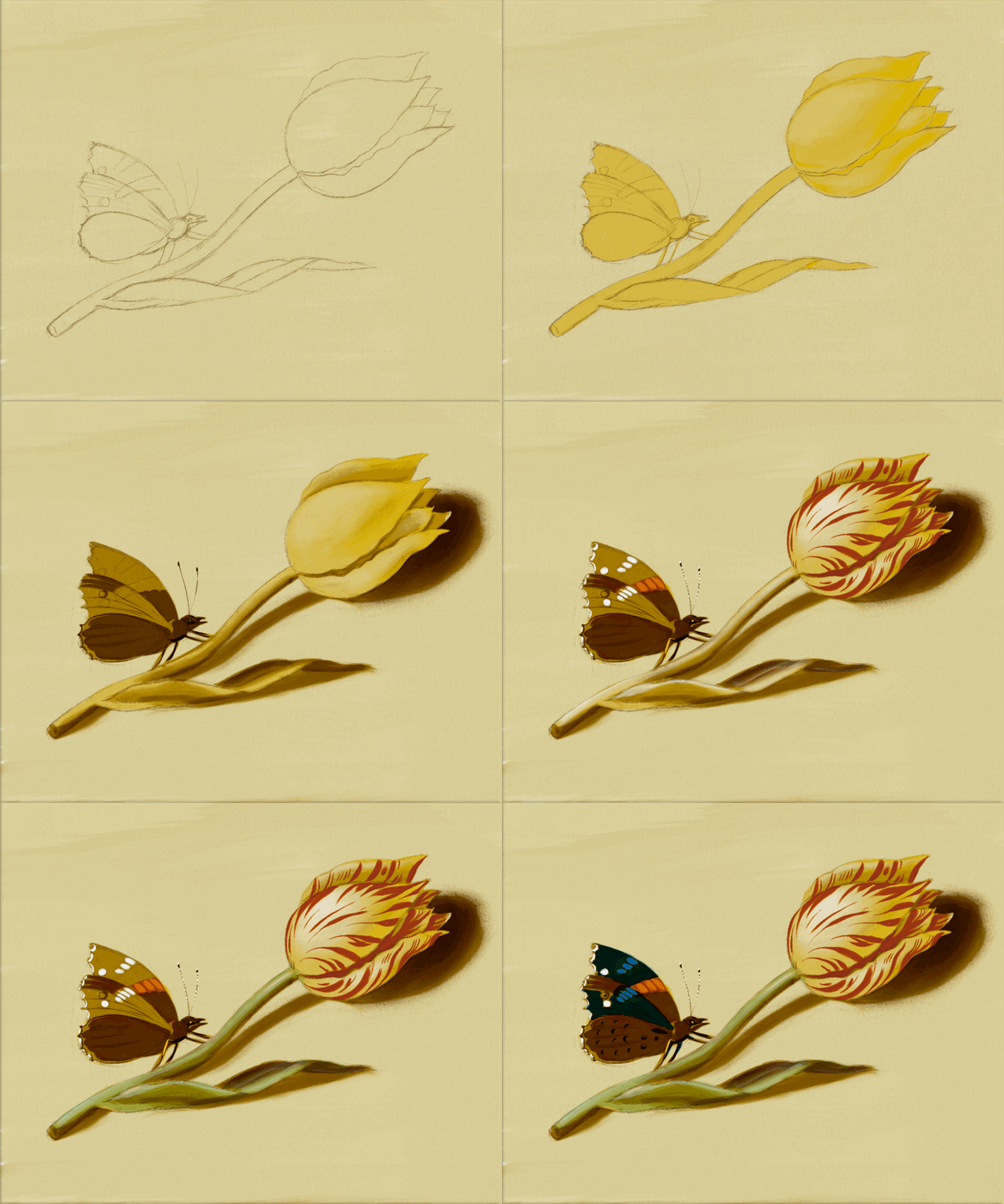
The "Striped Tulip" tutorial, from first sketch to finished glaze
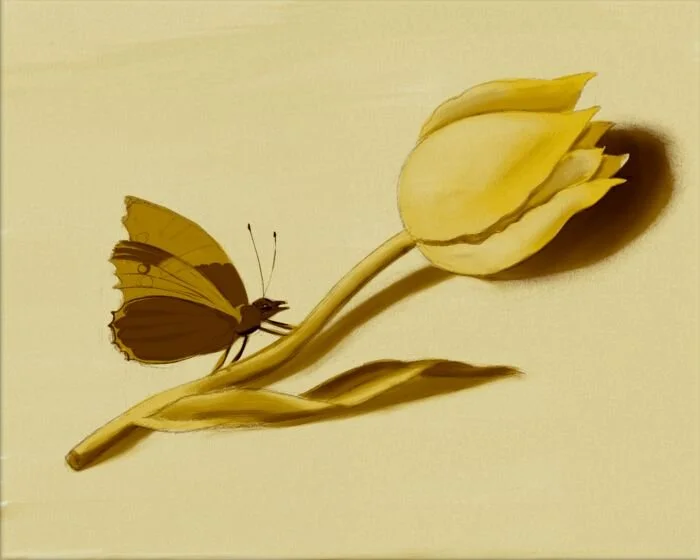
2 — Underpainting
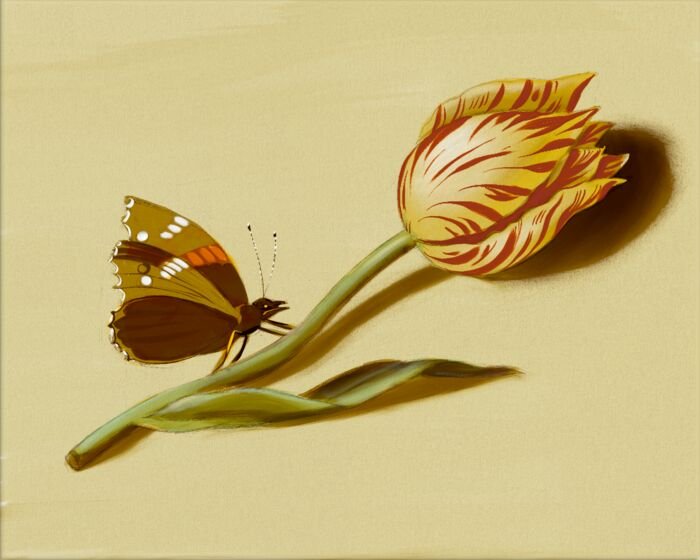
3 — Layered glazes
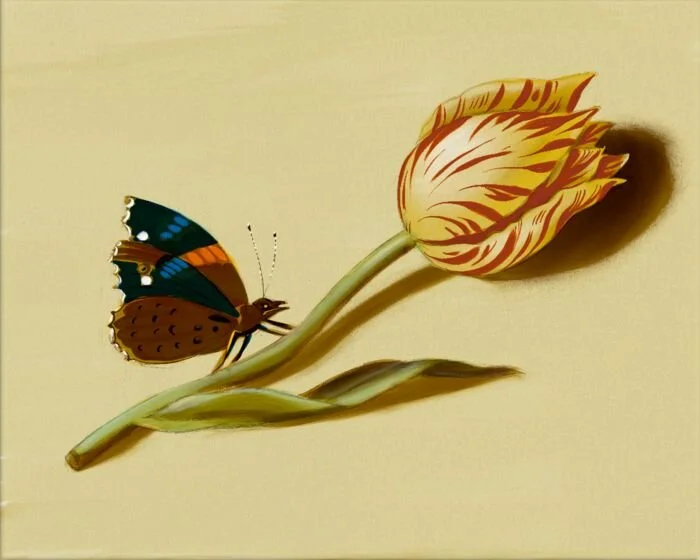
4 — Finished
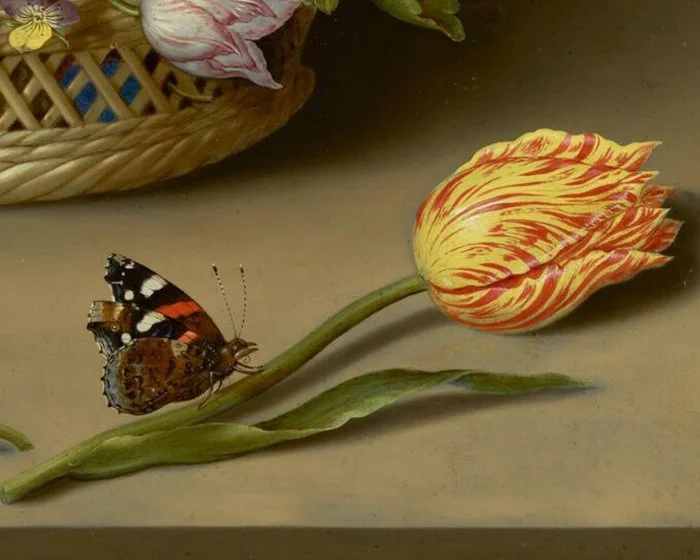
Every step is guided — instruction, brush, and color, in sequence. The "Striped Tulip" tutorial uses historical pigments (Indian Yellow, Malachite Green, Lapis Lazuli) and traditional glazing technique across seven steps.
Tutorials range from 2–4 minutes to 30+ minutes of focused practice — adaptable to a patient's attention and energy on a given day.
Patients take it home
Glaze has a free version, making the value created for hospitals accessible beyond clinical walls. Hospitals and institutions fund the program — patients take it home.
With the hospital's permission, content developed for a clinical program is added to the free public app. A patient who painted in the hospital can keep painting the same collection after discharge — and anyone using the free app benefits from work originally built for clinical care.
Glaze is currently used in schools and museums internationally. The hospital program builds on this foundation with content adapted for clinical environments.
BUILT ON FORMAL RESEARCH, NOT ASSUMPTION
The optical behavior of historical pigments and translucent paint layers was studied in laboratory conditions at Bialystok University of Technology, Faculty of Mechanical Engineering. The findings — proprietary to Well of Art — determined the architecture of Glaze. Funded under the EU Operational Programme Smart Growth (NCBiR, 2020–2022).
Bialystok University of Technology → EU-funded R&D · NCBiR → 2020–2022 → Proprietary IP
PHILANTHROPIC SUPPORT
Free access for patients after discharge, individual users, and schools is funded by the Ewa Sołowow Foundation.